Friday, May 30, 2014

Untitled - Chapter 2: À la carte

[Continued from here.] 

“One special whiskey mix for the lady in-charge,” Shahnawaz Kamil ordered the waiter, winking.

The underground banquet hall of The Taj Hotel in downtown New Delhi had been decked up for the grand luncheon. Chandeliers hanging from the high ceiling bathed the windowless room in pale yellow light which illuminated all its corners. The formally dressed urban gentry of New Delhi occupied the immaculate dining tables, their voices hushed and soft as etiquette commanded.

The entire Board of Directors of Sambhav Solutions was seated along a long rectangular table, of which Ira was also a part. Vertically opposite her sat Shahnawaz Kamil, the Chairman of the Board. The middle aged lobbyist had much bespoken connections with the rich and mighty, a fact that was as fiercely guarded as it was common knowledge.

The three-course meal had been wiped off every plate and the accompanying small talk had been concluded with all propriety. As glasses were refilled for one last time, the conversation had turned to business at last.

"So, Ms Parmar…we are curious to know where you stand on the issue of going public.” He said, addressing her.

“But you already do, Mr. Kamil,” she replied curtly. He smiled broadly, his grey beard not quite thick enough to hide his heavily wrinkled cheeks.

“I – like everyone here – am eager to hear it straight from the horse’s mouth!” His smug grin remained.

Slimy bastard.

She leaned forward and entwined her fingers, resting her jaw in their cross-section.

“I’m not one to repeat myself. However, seeing as everyone hear is not a very retentive lot, I will make an exception.” She looked around the table with a faux smile at the deadpan faces of the men and women seated to her sides, gauging their offence. To her immediate right sat Jo, whose diffident gaze she ignored on purpose. He seemed to be at a certain unease and his eyes kept darting restlessly between her and Kamil.

“You see, sir,” she continued, “to me, my values are paramount. Earlier, when I was new to the industry and the world of online security, I did not know the pressing need of personal privacy in our invasive age. After having read up a considerable amount and getting my own hands dirty, my views changed – for the better.”

She paused, looking from face to face, expecting rebuttal. No one spoke, yet remained inveterately stoic in their empty expressions. Kamil, the only exception to the group, never let his smirk get off his face. He was constantly fiddling with his giant red ruby ring that gleamed resplendently in the indoor light.

“Special house whiskey mix, ma’am,” the waiter announced and served a tall glass of golden liquid to her.

Apple fucking juice would’ve been just as good.

She thanked the waiter and took a swig out of the drink. It tasted warm and exquisite, yet unlike the best whiskey she’d ever drunk.

“You appear amused about something, Mr. Kamil,” she said, looking up, “Care to share?”

He beamed even more broadly.  

“Thing is, I knew exactly what you were going to say.”

“Oh, is that so?” she leaned back, smiling back and seething inwardly in anger.

“Indeed.” He continued to grin.

What the hell does he think of himself?

“Okay, whatever this is about, I don’t want nor care to know. All I know is that I’m done deciding. The Board may be obligated by whatever authority to come to whatever consensus, but I will see to it that my will is the way.”

Another sip and a warm feeling trickled down her chest. 
There was a few moments’ pause when everyone simply looked up from their glasses and into each other’s eyes. Within seconds, however, their surprised looks assumed an unexpected repose; they all laughed. Raucous laughter filled the room as curious occupants from adjacent tables looked in for the source of the outburst. Ira was harshly taken aback. Her head wheeled around towards Jo, who looked back at her with incredulity.

“Did I crack a joke?”

Another furious sip. Things were going from bad to worse: their laughter did not die out and she felt light-headed with each passing moment. She looked at the Board members, her eyes swimming across the room and her neck loosening at the pivots.

Kamil gazed at her as she had another go at the drink. With a sudden flick of his index finger and thumb, he swung his big ruby ring around the middle finger of his left hand. She blinked and saw him magically standing five seats closer to her on her right. In the moment she had blinked, Kamil appeared to have travelled from his seat to a spot at least 10 feet away.

What did they put in the drink?!

She blinked a couple of more times, just to make sure she was seeing correctly.
Dancing shapes, laughing men, smiling Kamil coming closer…her head was throbbing now.
“What…what’d you spike my drink with, you morons?” she said, furiously.

“You won’t believe me,” he spoke with his impish grin, “but we didn’t.”

She saw him gracefully walk up to Jo’s seat on her right, his grin constant but attaining a newfound genuineness. His eyes were now brimming with what she perceived as excitement, akin to an eager student’s when asked a question whose answer he knows. He tapped Jo’s shoulder gently, who shuddered at his touch. There was something definitely amiss between them, some sort of show of overbearing authority and tamed acceptance of subservience. The men exchanged a cursory glance of understanding as Jo vacated his seat for Kamil to occupy. He sat down with an authoritative sweep.

“The drink is fine, your mind is only spinning at my display of…time flexibility.”

She tried to get a hold of herself and steadied her neck, looking away. She blinked a couple of times and ran her fingertips over her eyelids, gently massaging them. She could hear the sounds around her normalize: the loud conversations spilling over from adjoining tables, the tinkling of plates against knives and glasses against glasses, the brushing and shuffling of feet against the carpet and the pleasantries offered by waiters at incoming guest.

“What do you mean?” she enquired in a more controlled tone, looking up at Kamil.
“There’s an awful lot, Ms. Parmar, that you have not been privy to.” His enigmatic smile remained, resilient and undaunted.

Ira was annoyed and out of patience, yet unnerved by Kamil’s optical illusion. He had appeared to jump half the length of the room in one go, within a fraction of a second. Was it some sort of two-bit trickery to fool her into submission of the Board?

“Do I really look like I’d care? I’ve talked enough, it’s over.” She announced with finality and got up. “Thank you for everything, Mr. Kamil. Hope you and the Board are in concurrence with my decisions.” She shot a contemptuous glance around the room and wheeled around.

She turned around to see Kamil standing right in front of her, having inexplicably appeared out of thin air, his lips twirled up in a smug smile.

“What the fuck…how did you…?” she looked at him with confusion, her balance suddenly wavering. She stepped back in amazement and supported herself on the table.

 “Allow me to explain,” Kamil stepped forward, offering her her seat. She flopped back into it and dug her head into her outstretched palms.

Pull yourself together.

“I’m afraid I’ve not been entirely clear about the nature of our abilities,” Kamil spoke, walking around the table to take his original spot.

“If you will look at me, I will give you a preface into what I’m going to talk about right now. I apologise if my…attempts at commanding your attention have been a tad theatrical.”

She looked at Kamil through bleary, unfocussed eyes and waited.

“Thank you,” he beamed at her. He took his seat and adjusted his suit, his manner suddenly sprightly and excited.

“Let me begin with – yes, The War. I will appreciate it if you let me finish without interruption.”


Quite a night.

--

Sunday, May 25, 2014

Dumb by Choice: The Problem with Mainstream Bollywood

In the November of last year, I had the good fortune of meeting one of my favourite filmmakers in India, Sriram Raghavan, during a literary festival.
It was quite by accident that I happened to be there at exactly the same time as his talk on adapting works of literary fiction into movies, which I joined in midway and gleefully listened to. Being an out-and-out fan of his short filmography (yes, Agent Vinod included), I could not resist asking him about the inner workings of the industry I saw so conflicted and varied in quality of content.

I worded my question cleverly, in perfect context with what we were talking about. “Sir,” I asked, my limbs shaking with fear, “on the one hand, you give us a jaw-dropping single shot sequence in Agent Vinod that is at par with the works of many cinematic greats, and on the other, you show a spy gyrating in a mujra parlor. Why did you go for such drastic variation in content matter within a span of minutes? Why is it that a dumbing down is always done in a mainstream Bollywood film?”

His answer was straightforward and honest. I will not attempt to reproduce it verbatim, but the essence of what he said was this: when the producer has 40 crores invested in a movie, you have to hand him the reins. It is no longer just the director’s creative call, but also the producer’s. He left it at that with a knowing smile, leaving nothing unsaid.

This problem does not appear to be one-off. Another short example I can think of off the top of my head is the curious case of Karan Johar. His career is populated by exceedingly stupid and sappy soap opera-ic films that hinge largely on star power, songs, glamour and overwrought sentimentality. Be it Kuch Kuch Hota Hai or Student of the Year, his movies are largely unappealing to the intellect and cringe-inducing at times (Alia Bhatt’s histrionics in SOTY, anyone?).

And yet, there is something that clicks with the audience. Always. A film like Kabhi Alvida Na Kehna, which is bad even by Karan Johar standards, manages to pull in crowds of admirers all over. I believe this perplexing approval of his works is largely because he is an exceptional filmmaker behind all that fluff. I think what we need to do is take apart one of his films to the bare bones and see them under the basic parameters of filmmaking, in order to understand the nature of his true prowess.

I will take the penultimate sequence from Kal Ho Na Ho as a case study, embedded here as a video (spoilers ahead). When SRK’s character is escorting the love of his life to her nuptial ceremony, the mood is heavy and tragic. The superficial happiness projected by the ongoing festivities and celebrations strike a stinging contrast with the impending tragedy of SRK’s eminent death, and, his eventual separation from Priety Zinta’s character. The third wheel in this equation is Saif Ali Khan’s character, a good friend in love with Priety and soon to be married to her. While he is not the antagonist, he sure is seen as the undesirable yet necessary end of the love triangle. The whole sequence, punctuated by rapid cuts synced to the beats of the music (3:22), excellent acting, expressionistic lighting (1:16) and fast frame rate recording makes for a visual feast. It is hard not to get flowed away in emotion when SRK breaks down as the groom walks away with the bride and he is left to wallow alone. Alone, not only in his approaching death but also mentally and physically, isolated from the celebrations.

It is easily seen how well-constructed and conceived the scene is. It requires a certain caliber to pull it off, and while Nikhil Advani was formally the director, KJo is said to have been a big creative influence in the making of the film. I see these flashes of brilliance splattered all across his films, finally culminating in his brilliant short segment in Bombay Talkies. In my opinion, his segment was better in theme, tone and tenor than that of noted directors, Zoya Akhtar and Anurag Kashyap.

What is it, then, that compels Johar to chug out trash like SOTY and K3G ever so often? Why does Anurag Kashyap extoll his brother’s disastrous filmography as being a ‘throwback’ to the sort of old-fashioned, macho-hero films made around Bachchan in the 70’s? Is it because to stay in business, one must ensure a profit, and a profit in the Indian market is to give in to the dumbness demanded by the average viewer? Isn’t this true for every society, every country and every cinema industry? Why do we continue to sell dumb shit in the name of financially viable, ‘mainstream’, ‘masala’ cinema? More importantly, till how long will we go with films like Johnny Gaddaar, Black Friday and Shanghai not recovering their production costs? With films like The Lunchbox and Ship of Theseus capturing the public’s imagination, are we edging any closer to the dream of intelligent and meaningful cinema ruling the rooster in mainstream Bollywood?


I believe a full-scale revolution is nigh. 

Saturday, May 10, 2014

Story Series: Untitled - Part 1

(Holiday season is back, and I'm coming out with another ambitious story series that will hopefully run throughout this month and the next, culminating before my third semester of college kicks off. 


I will not reveal anything about this story and let you all figure out how it'll pan out in the subsequent chapters. I want to gauge the level of anticipation and interest I can create in a story without letting the reader know the plot outline in advance. 

Since I am bad at nomenclature, I am leaving this story untitled as of now. If and when an apt title comes to me, I shall update this post for all to see.
Needless to say, any comments/suggestions/criticisms are welcome here as well as on my FB page. Read on...)

Chapter 1: Invitation to a Party

“We will be eagerly expecting your graceful presence, Ms. Parmar” the elegantly worded invitation concluded. The initials were not printed or separately inserted, at least to the naked eye, which struck her as odd for a moment.

Fuck this finery.

Another party, another socialite get-together celebrating hollow mirth and pretended fellowship. Richness and fame came with their own baggage, more so for the CEO of one of the most successful organization in the country.

Four years ago, as a disgraced engineering dropout, she couldn’t have imagined her start-up to have scaled such heights. Her patented model of software encryption had not only earned her plaudits from the academic and scientific fraternity, but also presented a huge business opportunity. She could offer instant online privacy to millions of government-wary consumers willing to shell-out a fortune for her services.

She had started at the micro-level, going door-to-door with her software installed on a writeable CD. In the pre-internet era, she had relied on word of mouth and cheap sharing among her locality friends to publicize her idea, earning a trifle for every sale.

“What the hell is she always up to, this girl!” her father would complain to her mother, who’d have little time to look into the daily engagements of her teenage daughter. “Doesn’t have a degree or anything, what the hell is she going to do when she grows up?”

Aap bhi na, don’t worry too much. Anyway, she has to go off and get married,” she would reply hurriedly. 
Somewhere deep down, her parents had come to terms with the fact that their middle class upbringing had failed to launch her into the fiercely competitive world. Marriage appeared to them to be the last bet, but a good one at that: she wasn’t wanting in the department of looks and appearance. At 15, she had eloped with a classmate and would have succeeded in running away from home, had the plan not been foiled by her spoilsport-of-an-elder brother.

“Dad, Ira is planning to run away with that village idiot of his,” he’d blabbed.

“What?! When?”

“Tonight. I eavesdropped on her when she was on the call with him.”

That had done it for her. She had been severely punished and grounded at home for a full week. Considering this reprimand enough to suppress her ‘undue’ interest in the opposite sex, her family had not anticipated her next move.

After a day of mewling and whining, she had reserved herself to the confines of her bedroom and refused to come out despite repeated calls. Food was sneaked in through the gap in the door by her brother, who felt guilty for having told on her. When she finally did come out on the third day, it was with a homemade transistor in her blackened hands, her face shining through all the muck and her open hair messily falling on her face. She was nothing like her earlier self; all her angst had vanished. One could contend that she looked ungracefully sexy in a very schoolgirl-ish sense.

“Look what I made, Ma!” she ran to her to display her new ‘invention’.

Her parents’ anger had cooled off by now and they greeted her with surprised acceptance.

“What is it, Ira?” her brother asked, an engineer-in-the-making himself.

“A radio transistor, bhaiyya. I saw the design in one of your books, and decided to make one myself!” Her glee was palpable. As months went by and technology progressed at ever-faster rate, her gadgets changed and so did her mastery. From merely possessing a dextrous touch with mechanics, she grew to teach herself to code and write virtual languages which rarely anyone of her age even knew the name of.

It was when she topped the National Science Olympiad in the Delhi state her parents thought it best to leave her to her own devices and not interrupt her natural course of inclination. She had not looked back ever, having precociously finished school at 16 and joined Indian Institute of Technology, Kanpur the next year.
A drop of estrogen in an ocean of testosterone, her natural instincts had taken over as soon as the restrictive home atmosphere gave way to the freedom of the girls’ hostel. She would juggle time between her hobbies of software coding and chess with outings with the most ‘desirable’ men on campus. Her sex-capades were known far and wide and she had promptly became to be known as the ‘slut’ of the college. She was known to consume recreational drugs and her dorm room was looked at with disgust and, to be fair, a detestation born out of envy.

This disrepute was what eventually led to her ignominious eviction from the institute the subsequent year. She would have liked to believe that she had been expelled because she refused to conform to the ancient values of an institute in decadence, but she knew it was more to do with her lapse of judgement that had led to the extremity.

The intercom line on her desk rang, shaking her off her thoughts. She cast the invitation aside with a belittling shove, letting it land in the heap of trash already too full for the waste basket, and picked up the receiver.

“Ma’am, Mr. Almeida is on hold. Want me to route him through?”

She sighed. Joseph ‘Jo’ Almeida, one of her earliest aides cum go-to lawyer was starting to get annoying with his all-too frequent calls of late.

“Go ahead.”

The line dropped momentarily and the familiar low-pitched, inconsistent voice of her lawyer greeted her.

“Hey, Ira! Wassup?”

“Nothing much, Jo. Just being barraged by some unneeded invitations and phone calls.” She hoped he would take the hint.

“Haha, we all have been there. Anyway, what are you doing this Sunday afternoon? Is there a prior engagement?” His voice gave away his anticipation to meet her.

“Um,” she thought rapidly, “I don’t know Jo…” Her eye fell on the crumpled invitation she had strode into the dustbin moments ago.

“…oh yes, I have this lunch invitation! Some fancy get-together. I’d rather call sick and--”

“Oh, no,” he cut in, “that’s what I wanted to talk about!”

She sighed.

“What about it?”

“You must attend, Ira. All the major stakeholders in our company are going to be there. I’ve heard that the Board itself has convened the whole thing.”

‘Our company’ my arse.

“What for, but?” She was genuinely curious.

“To, er…” he hesitated, “to get you to…change your mind about going open source.” His voice had grown softer and dropped down to a whisper.

Ira fumed, warm air flaring up her nostrils. She had announced to make the code of her program public in two days and known that many in the Board of Directors had not taken kindly to the proposal.
Her initial lust to gain financial riches had long since exhausted. After assuring a lifetime of comfort for herself from the money she had already made, she had had an actual change of heart and decided to give it up for free usage all over the online world. While governments were getting increasingly paranoid about private content on the internet, online rights activists had been campaigning against allegations of snooping through private mails and messages by the NSA. She had been in the eye of the storm since she was one of the very few service providers of authentic encryption software that could be updated to work its way around every governmental decrypting device and system in existence. Her allegiance had been a matter of speculations for months, until last week when she had announced to release her code into the open source in the coming few days. Not only would that deal a lethal blow to the National Security Agency and its global counterparts, but would also be a blessing for international militant outfits over the world, who could customize the code and tailor it to their specific needs.

“Listen, Jo,” she started, “how sure are you about this?”

“I’m quite positive, Ira. In my opinion, you must surely reconsider your stance.” He suddenly sounded on the edge of desperation.

“No, I am not going to do that,” she replied firmly. “I know what I’m doing with my creation and no one can arm-twist me out of my resolve.”

“But think of all the wrongdoing you are indirectly encouraging!” His protests were rising in pitch and amplitude with each syllable.

’Indirectly’ is the important word here, Jo. I am not responsible for the actions of a criminal who avails my cutting edge technology. My job is to give to the world what I know and am capable of! What the world makes of it isn’t my purview.” She smiled inwardly, feeling happy about her eloquence.

“But try to understand, Ira…”

“No,” she snapped, “I won’t. And Jo, why the fuck are you so concerned? Do you have a stake in this decision, too?”

Don’t fuck up, Ira. Don’t let anger get the better of you.

The line was blank for 5 seconds; she couldn’t hear him breathing but knew he was around.

“Jo?” she asked, “listen…I’m sorry.” She added apologetically.

“You…just don’t get it, Ira.” She could hear his voice quivering. “I can’t make you see sense.”
His final words rang in her ears as he cut the call before she could respond. She sighed to herself and slammed the receiver down.

“Fuck you, Jo!” she shouted at the telephone and stretched further back in her recliner in frustration.
Why was he making such a big deal out of it? She had always known him to be a level-headed person who always took her side of the matter and only questioned her in an advisory manner. Was the Board involved in any way?

Why can’t shit be simpler?

The more she looked at the crumpled invitation nestled at the top of the wastepaper basket, the more reasons she found to attend the lunch.

Do I even have a choice?

She clicked her tongue and got up to prepare for the gathering.

(Read Chapter 2)

Monday, May 5, 2014

Hamara Neta Kaisa Ho?

Let me begin by clearing the air about my political inclinations in 2014: BJP.
Why? Because they appear to me to be the least of all evils. Because despite their murky past, their current leader appears forward looking and promising.

However, this piece is not about politics. Okay, maybe it is, but it surely isn’t ONLY about that. When I say ‘neta’, I am not referring to what it is usually taken to mean in English, that is, a politician. Here, I am harking back to the original, politically irrelevant definition of the word which is best translated to ‘leader’ in my limited understanding of the two languages.

The question I’ve raised is to do with our idols, the leaders whom we look to emulate as people. How must our leaders be? How must they dress up, behave and conduct themselves? I shall be addressing these questions, or hoping to do so to my best ability in the coming paragraphs.

I believe a leader is most definitely rich and prosperous. I firmly think that s/he is not starving or wanting in basic needs. If anything, s/he must be someone well-off with their head held high and feet firmly rooted to the ground. Their appearance should not be diminutive but impressive and imposing. They must be dressed in good clothes, commute in the swankiest of vehicles, reside in the poshest of places and have the best luxuries at their command. I am not painting a picture of excess but surely one of industry and prosperity.

 Lest I am accused of possessing traits of a ‘capitalist pig’, I will say that I am indeed pro-capitalism but not anti-poor. And yes, I sincerely believe the two can co-exist not just harmoniously, but complementary to each other. Richness is a quality we must all extoll and promote. The ‘aam aadmi’ does not want to remain ‘aam’; s/he only wants to grow in wealth and affluence. The poor does not wish to remain grovelling in the lowest pits of poverty forever, hence we must NOT idolize images of modest living and austerity. We must advocate a life which is grand and incandescent in every sense, a community of haves without have-nots. There will always be the less fortunate and the more fortunate, but our aim in life must be to attain a state of living which allows us to sustain ourselves without pinching the pocket every time.

One is not a villain simply because one is born rich or has acquired riches as a result of one’s hard work. Social sensitization is totally independent of wealth. Case in point: Bill Gates. One of the richest people in the world is also the greatest philanthropists of our times.

If we must venerate something, it is a life of wealth and hard-earned fortune. Our priorities should be diligent toil and personal hard work which will eventually uplift the society as a whole. And what better way to manifest our greatest ideals than in our leaders?


Tuesday, April 1, 2014

Notes on Queen or Why the fuck was the bra censored

it starts like cocktail, middles like english vinglish and ends like highway. the mood and pace is similar to many previously attempted films in Bollywood and beyond. there is little it says that has not already been oft-repeated, and yet, it is one of the most original films i've seen coming out of mainstream Indian cinema.
what, then, makes queen reign supreme in my heart, you ask? it is crafted in the highest traditions of cinematic visualization. it does not pander to or give in to or dumb down to the level of expected idiocy by the average viewer. we have the best actors delivering the best dialogues, edited impeccably into sequences that breath newness in every frame.

we have Ranaut who displays great range and spontaneity as her character graduates from a victimized, docile would-be housewife to a confident, independent go-getter who has her head and heart in the right places. we have writers and a director who seem to have given a free hand to the actors to improvise as they will, resulting in a script which is charmingly offhand at places yet to the point when needed.
the music is an instant winner, something which has come to be rather obvious when Amit Trivedi helms the symphonies. the editing, too, adds layers of cohesiveness despite (or rather, because of) its occasional non-linearity. Many pivotal scenes lead up to an effect and the narrative promptly jumps to a short flashback explaining its cause: the cinematic equivalent of a footnote reference.

"Mera sense of humour bohot achha hai!"
a lot has been said about the film already. I do not wish to add to the crowd and be as brief as possible. Queen talks of female emancipation in the 21st Century India like no movie has ever done before in mainstream Bollywood. It does not preach or harp, instead employing humour and satire as tools to drive home its message. The sexual and intellectual freedom of the fairer sex is an issue that makes a showing here with almost poetic subtlety: it creeps up on you when you're too busy beaming at the saccharine overdose on-screen. Where others would have degenerated into angry diatribes and arguments, Queen throws up questions (and answers them, too) without losing its humour. We have the eponymous heroine proverbially discovering herself through travel and gaining new experiences overseas.

Travel and exploration are like secondary characters in the film. I was reminded of the following Mark Twain quote not once or twice, but throughout the movie:
"Travel is fatal to prejudice, bigotry, and narrow-mindedness, and many of our people need it sorely on these accounts. Broad, wholesome, charitable views of men and things cannot be acquired by vegetating in one little corner of the earth all one's lifetime."

I realize this to be the one of the finest indications of true wisdom. to be open-minded and free from the poison of hatred, hesitance and presumption, one must travel as far and wide as possible. to accommodate and acknowledge a contrary view to yours is the biggest proof of mental greatness. be Hindu, but sympathize with the Muslim. Be atheist, but try and understand when a Hijabi woman justifies her choice of clothing. I can keep on picking out examples that illustrate my point to no end.

At one point in the film, a close up shot of a bra has been censored. I very honestly want to put this up to the Censor Board of India: why? Are female undergarments a matter of obscenity and vulgarity, so as to invite censorship and suppression? Are we not nullifying whatever the movie itself stands against, that is the demonizing and taboofication of female sexuality? Fuck that, a bra is not even a sexual statement, it's just a bloody piece of garment!

That, or maybe I'm overreacting. In that case, keep calm and forget the film for what it stand and remember it only for Lisa Hayden's cleavage-show. And those legs man, so hawt!

Monday, February 17, 2014

self-unaware: a poem

ignorant of the fruit she bears,
she walks the garden, a doe.
unmindful of her sprouting seed,
she traverses the farm, alone.

her eyes display, a naive glow,
her words impress, now ebb now flow,
no reason, rhyme, an empty shell,
but oh my lord, what a bombshell!

her feet are tender, unflowered buds,
her hairy brow, a study in youth.
her bouncy hair, a lovely fixture,
her unsteady pace, so immature.

she walks, ignorant of her steps,
unaware of the self, averse to thought.
she walks, blissful, enraptured lass,
"she lives the poem she cannot write".

Tuesday, February 11, 2014

Kindle > a physical library

[In response to this.]

The article linked above lists some pointers that supposedly prove how, reading books the 'traditional' way is better than doing so on a Kindle. I, being a staunch e-book loyalist take immediate objection to such an absurd notion. I do not hate reading 'real' books, clasping them in my hand, smelling the yellowing pages and the like, but owning a Kindle has made me look beyond the tactile trappings of the book-reading process. It has lent me a greater sense of meaning and purpose to reading a work of literature. I now value words, ideas and stories more than the medium they are packaged in, because at the end of the day, little else matters.

Read on as I provide sound counter-arguments to the points put forth in the article:

‘You can’t write your name in it, as if to mark it with pride as its original owner.

Besides the point. You can, more importantly, name your e-book device anything you want. Isn't that cooler in a way: having a personalized book-portal named to suit your liking, much like a pet?

‘You can’t leave it places for the next person who finds it to enjoy.
*can.

‘You can’t add it to a bookshelf to expose its intriguing binding.’
Again, merely a touch-feel barrier. Grow up and stop whining, you sound like a pre-teen throwing a tantrum for having their pacifier snatched away.

‘You can’t pile it on top of others, showcasing your accomplishments as a reader.
But you CAN boast a finished book by the emboldened dots under its title. Go buy a Kindle for further reference.

‘You can’t keep your coffee cups on it after you’ve long finished reading its pages over and over.
You can, technically. But do bear in mind that the universe cannot keep pace with your stupid, cantankerous pet-peeves.

‘You can’t find first editions to continue adding to your collection.’
For once, I aver. That’s all; no comeback! You’re in the right on this one. Touché.


‘You can’t leave notes in it for the next reader who picks it up.’
You so can! There’s a specialized tool for that in the cheapest of Kindles (the one I happen to possess).

‘You can’t personalize it with your own thoughts on its words.’
What is that even supposed to mean? If it is what I think it is, refer to the last answer.

‘You can’t look for your favorites in dusty, old used bookstores.
The same way you cannot travel in those good ol’ steam engines and horse-carriages and hansoms of the Dickensian era.  Or experience the orgasmic joy of having invented fire by the cavemen. We always move on from things of the past to things of the present, it’s natural progression. To obsess and dwell over relics of the bygone is a worthless engagement.

‘You can’t establish a collection to admire as it grows.’
Again, *can.

‘You can’t underline its passages, which you find connection to in every word.’
*can.

‘You can’t highlight your favorite lines to stumble upon effortlessly when you want to be reminded of their eloquence.
BLOODY FUCKING HELL, *CAN!!!!!

‘You can’t smell its age between the pages.
Irrelevant to me, but I guess it holds an incalculable charm to some. Agreed, then.

‘You can’t fall asleep with it on your face, drifting off into a dream from the imagery it instills.’
Fanciful imaginations. The same would entail if you were to sleep with a kindle cupped in your hands.

‘You can’t pass it down to your kids, gifting them with the most moving words of your own young adulthood.
Enough already. *can.

‘You can’t start a conversation when someone recognizes the cover.’
But you can totally start a conversation by spotting a fellow e-book reader in a crowd of a hundred. Besides, seeing someone interesting enough to read from an e-book reader is every bit as exhilarating as finding a person reading a book of your liking.


‘You can’t wrap it in paper and give it as a gift, to pass on the same lessons it impressed upon you.’

You can gift wrap it if you want. You can deliver books directly to your kin’s Kindle for them to be pleasantly surprised!

In a nutshell, e-book readers give us an advantage of a much larger range, affordability and portability of books. They prove that technology is not destroying, but reinventing the way we read. This revolution in our understanding of the written word is only momentarily being opposed by a fringe group of inertia-stricken readers who rate the physicality of books over their content matter.  


Monday, February 10, 2014

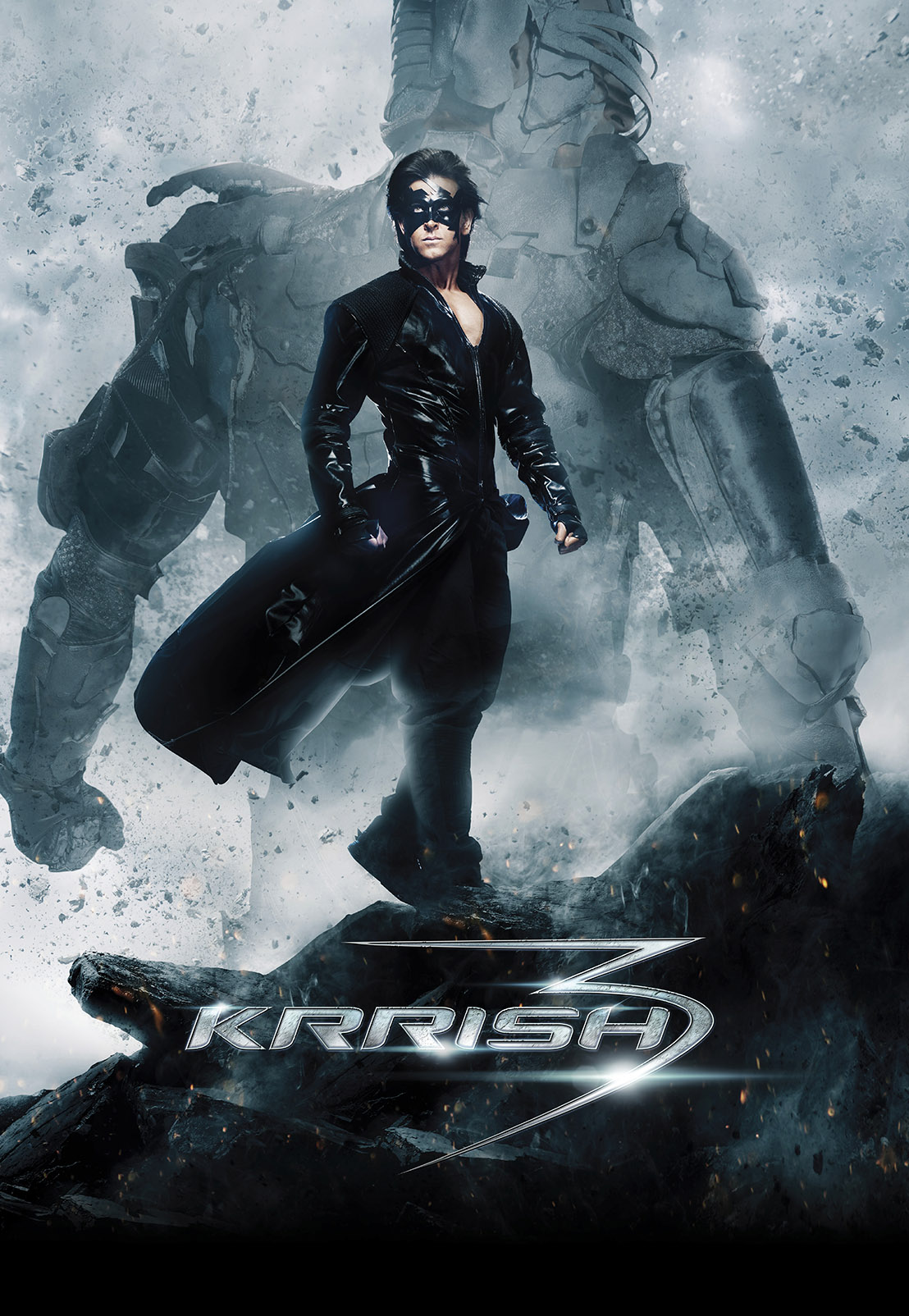
Why Krrish 3 isn't as shitty as it seems

1. It's not a blatant copy of any Hollywood or South Indian film (at least that i know of). Agreed, the character of Kaal borrows his paraplegia-addled mentalism and magnetic abilities from both the chief protagonist and antagonist in Xmen, but there is little further similarity. The fact that it is better than the Rowdy Rathores and the Dhoom 3s in terms of originality makes me like it better on a relative scale.

2. Hrithik Roshan, despite his incessantly jerking head in Krrish's mask, delivers a fine, likeable performance. The contrast he brings between his portrayal of the father Rohit and the son Krishna is believable. His Greek God physique only helps.
The numbering makes no sense, admitted.

3. The concept of singularity of life is, though rather unsubtly, expressed probably for the first time in mainstream Bollywood of our day. The science is preposterous but the philosophical undertones are strikingly original for a film this shoddy in other departments. I do not personally side with this argument of metaphysical implications, there are many I know who do. The religious theory of Advaita is preached in an aesthetically (not logically) pleasing way.

4. Vivek Oberoi is serviceably good.True, his self-acclaiming comparisons with the late Heath ledger's career-defining performance in The Dark Knight are completely ridiculous, he is worth his salt as the sneering, jeering, Hinglish spewing super-villain.

5. It ties in well with its predecessors. There are vital, plot-driven references and connections to the events in Koi Mil Gaya and Krrish that decide the fate of characters in Krrish 3. Such narrative continuity is scarcely, if ever found in mainstream Bollywood's half-hearted attempts at franchise-creation (picture Golmaal, Dhoom and countless Mahesh Bhatt films and you'll know what I'm driving at).

7. Krrish is projected more as an idea, an emblem than an individual. This is strangely similar to a running theme in Nolan's Batman trilogy, but it did not feel copied or ripped-off to me. Krrish is a more visible, approachable, and Everyman's hero than the Masked Crusader. He sort-of walks the tightrope between Spiderman and Batman, to middling success.  The duality of Krrish and Krishna is not fully explored, except for a single cringe-inducing verbal exchange between Kaaya and Krrish. But I'm sure this theme can be exploited in subsequent follow-ups.

8. Most importantly, kids love Krrish. Checkmate, serious cinema-loving parents!

Thursday, January 30, 2014

She.

no more the carefree lovestruck lout,
no longer lethargic days in wait.
remains a lonesome void, a drought,
description eludes my mental state.

for the past is my permanent home,
the present but a transient tenement,
it passes me as time goes by:
deceitful, spiteful, unstoppable time.

blank verse and praise-prose, plastic's worth,
roses, once blooming, wilted and brush'd
aside on the cobbled boulevard,
in heaps and mounds and gather dust.

the bleeding heart in ink, smeared,
the frenetic scribbles of a madman in love,
of sighs and glances, impish smiles,
i write eulogies of days better.

i write, and write, in hope of release,
not inspiration; closure, i seek.
oh, look, they say, he fell on his face!
my dreams of past are up in a haze.

she smiles at life like a flower in spring,
she seems to laugh at its plentiful feats,
her graceful eyes do still excite,
her dainty person, still intact.

but more than that, her spirit's untrammelled,
her thoughts sky high, her rudder still strong.
and in this knowledge, i survive,
upon our parting vow, i abide.

Wednesday, January 15, 2014

Scorsese through Wolf of Wall Street

This story dates back a couple of years, when I, in my newfound love for motion pictures, had dedicated my nights to sweeping off entire filmographies of master filmmakers from torrent sites. I’d download the torrent best fulfilling my file size-to-picture quality ratio (I preferred- and still do – a DVD quality rip of about 700MBs), mount the file on uTorrent (or Azureus, whichever’s latest version my tech-savvier brother approved of) and put the screen to the lowest brightness setting and drift to sleep. The 256 kbps speed ensured that the download took time till dawn to conclude, which was when my biological clock would wake me up and I would confirm the download, only to go back to an enhanced state of slumber, reassured by the knowledge of a successful download and put to rest by the anticipation of spending the following night watching another masterpiece.

Those were the days.

During one such movie-watching spree, after having been amazed and intrigued by Nolan’s pre-Dark Knight wonders and charmed by Tarantino’s inimitably colourful universe, I discovered the cinema of Martin Scorsese. I had heard his name being toted on this little community of online cinephiles on Orkut, which we had chosen to call ‘Movie Doctors’ (it was something to do with ‘dissecting’ films. Also, one of us was an actual doctor). There was word that his films had come to shape modern cinema as it was; his much-touted Taxi Driver and Raging Bull seemed to be on the lips of every fact-spouting, trivia-memorized film enthusiast. Roger Ebert, too, one of the most venerated figures in film criticism (he passed away last year; condolences), hailed ‘Marty’ as the ‘greatest living film director’, which really was something.

I was thrilled; I just had to see his films and gain exclusive entry into the ‘it’ crowd. I remember feeling envious of people possessing more knowledge and boasting viewership of more films than me. At the first opportunity, I wanted to cover up for what I saw as the disadvantage of my relatively younger age and brag about the films I had completed watching. I owe most of my awareness of films to this very quality of envy over others. 

I remember downloading Taxi Driver for the first time with the zeal of a teenager on their first kiss. More than the film itself, I revelled in and savoured the period of waiting, knowing that the film would be mine to keep in just a few more hours. I might have slept late and woken up at dawn to supervise the download, and seeing the full green bar bearing the words ‘Download completed. Seeding’ must have put me to an instant, satisfied sleep.

It was not until a few weeks later that I could get time to watch my prized download. I remember having dinner in a tasteless haste and impatiently brushing my teeth before jumping into my bed, all ready for school next day. I opened my laptop and navigated through to the folder which housed the film. Before I began, I remember running through all the raving reviews and plaudits the movie had amassed over the years. Assured that the film would not let me down, I finally double-clicked the video file and got down to it.

I’d be lying if I said the film had me from the word go. It took me a lot of effort, in fact, to follow the proceedings since the characters spoke in a thick accent and the New York colloquial tongue was impenetrable. The milieu in which the story unfolded was unfamiliar and cold, the characters spoke more and did less and the political overtones were lost to me in entirety. I did not find it to be an easy watch – not that I do today. Robert De Niro’s method acting pulled me in, and so did the vulnerability of a teenaged Jodie Foster. There were scenes, individual scenarios that captivated me and made me want to revisit them over and over again. To name one, there is this now-famous scene where a nocturnal passenger (played by Scorsese himself!) asks De Niro to stop on his street and look at the window of his apartment. He points out to the silhouetted window and tells him how his adulterous wife had his lover over in his absence. In what appears to be a manic bumbling, he vows to kill them both to the unsuspecting taxi driver. The menace and malice in his voice and body language unnerved me deeply, so much so that it remains, for me, the most easily recognisable few minutes of the film.
THIS scene

It took me about 3 viewings to gain a fuller understanding of Taxi Driver, but I won’t say I was swept off my feet by what I surmised. It was a contemplative picture, a complex but flawed exercise. The plot meanders like Travis Bickle’s cab at night-time, wanting ‘drive’ and vigour.  What bleeds on screen is a man’s urge to express freely and unshackled, without the tether of budgetary or logistical constraints. If for nothing else, Scorsese can be commended for his brave new artistic vision which he introduced in Taxi Driver. The frustration and insecurities of a young, working-class man in the USA of the 70s have scarcely ever been depicted with such intensity ever before or after.

However, the point of this post is not to dissect Taxi Driver; it is about my journey of understanding Scorsese through his movies. I saw Raging Bull next, but it failed to capture my imagination as much as its chronological predecessor. I found Jake La Motta’s chronicles excessively chatty and yappy to a fault, which did not entice me as a young, impatient viewer. I was probably too long fed with a brand of films that relied heavily on extraneous action and cheap thrills to form a smokescreen that made any other type of movies unapproachable. What had me more repulsed was the plasticity of the lifestyle that the film seemed to take almost flippantly.  Unabashed Infidelity, excessive violence, materialism, vanity and depravity ruled almost all actions and decisions made in the film. I was disappointed by the absence of a moral radar that I was so accustomed to seeing in any work of cinema. Taken aback at my failure to appreciate a film that the critics hailed as a favourite, I left my Martin Scorsese filmography incomplete and moved on to other, more instantly gratifying cinematic experiences (do not read ‘porn’).

Then I saw Goodfellas, and everything changed. There were still the typical Scorsese elements: excessive violence, uncouth dialogues and an unmistakable disdain for the limits of social propriety, but it was all done very stylistically and spiritedly. I related to De Niro’s gangster because of the very reasons I disliked them in Taxi Driver and Raging Bull. Here was a man, a young, youthful and hopeful man who was raring to make it big in life, trumping all odds that came his way. Deeply flawed and almost always on the wrong side of law, these men made themselves loved by their intrinsic lust for life.

Yes, lust; that is the word. All of Martin Scorsese’s protagonists are lusty and lively, self-aggrandising and larger than life. They aspire to be bigger and greater than the world around them would like them to. This is a predictable curve in almost all of his films: the first act sees a rookie, a new kid-on-the-block rising through the ranks, only their talent and/or dogged determination to keep them company. The second act is where things start to get messy and the empire our hero has established begins to crumble due to their flawed foundations. The denouement chronicles his (yes, it’s almost always a ‘he’) eventual but inevitable downfall, the souring of the once-thriving dream. However, despite all failures and setbacks, the protagonists more or less make peace with their present modest conditions. They give up their grand plans, but their hope is well intact, and that is the whole point of a Scorsese movie.

This brings me to The Wolf of Wall Street. In it, Martin Scorsese has perfected this idea and presented it in the most enchanting visual manner. Assisted greatly by a daring act by Leonardo Di Caprio (give that man an Oscar already!) and a production team that gets almost everything right, the master has clearly hit his peak with his latest outing. The film oozes with passion and energy, a youthful vitality that seems missing in all the other releases last year. This, coming from a septuagenarian, is a wonder in itself; it is hard to think of any of his contemporaries conceiving such an irreverent and audacious film in today’s day and age. Trust only him to find books that follow the aforementioned plot map to a T, and to adapt them in a unique and value-added way.
The biggest drug

Many will hate The Wolf of Wall Street for its casual approach and questionable subject matter, others will be put off by its over usage of the f-word (506 times in total). Some will find it silly and brainless, while others will criticise its apparent misogyny and unapologetic objectification of women. There will, however, be a sizeable group that will admit it is just too much fun to be missed over these mere trivialities.

“Art is amoral; so is life. For me there are no obscene pictures or books; there are only poorly conceived and poorly executed ones.”

-Irving Stone

Wednesday, November 6, 2013

A Blind Date


“People are taught that pain is evil and dangerous...Pain is meant to wake us up ...You feel your strength in the experience of pain…Pain is a feeling. Your feelings are a part of you. Your own reality. If you feel ashamed of them, and hide them, you’re letting society destroy your reality. You should stand up for your right to feel your pain.”

-Jim Morrison


I sat with him at the coffee shop. It was one of those ambient places with irritatingly low-lit interiors and pseudointellectuals with too much money on them. The waitress had come in expectantly into our smoking booth, but was sent back rather curtly by my company. I would have fancied a cappuccino for myself, but the thinness of my handbag protested in support of the contrary. He, being all cool and ‘modern’, did not ask me twice; life sucks when you’re a broke girl in 21st century urban India.


After downing about two flasks full of sneaked-in vodka, both he and I were loosening up, desperate to make our interaction meaningful.


“You know what,” he started, trying to spark off a conversation. “I’ll tell you something which is completely true, but you will never believe me.”

Flogging a dead horse, man.


“Try me.”


“You sure? You won’t be allowed to go back on the challenge.” His tone was condescending, which made me all the more determined.


“Go on,” I spoke with nonchalance.


“I am…not of this sys…I mean, this place.” His hesitance was not one borne of inebriation; that much was evident. I remained silent, waiting for him to resume.


“I am a visitor in humaniform. I came here to complete my research on the many types of human peoples. It requires me to stay anonymous.”


I sipped at the flask stealthily, keeping a subconscious eye out for the waitress. I sported a deadpan expression, and I did not have to force it.


“Of course, of course,” I spoke absentmindedly, rethinking whether he was actually sober as he appeared to be. I’ve seen many drunkards in my life, and I could bet my life’s meagre savings if this guy was under the influence at the moment. No quiver in the voice, no droopiness of the eyes and no slurred, fumbled words. He was dry as ever.


“You don’t, do you?” he asked, resignedly.


“I..well, yes, I don’t.” The truth.


He gave a wry smile and continued to beam at me. There was something in his gaze that captivated me; nothing remotely romantic but nonetheless appealing. He was talking without a word being spoken.

“Ok, go on, I’ll believe you,” I said with acquiescence, adding a small “…for now” under my breath.


“You won’t remember any of this conversation tomorrow, anyway,” he said, “so I’ll tell you.”


“I come from what my race calls the –“ he made a guttural sound quite unlike anything I’d thought possible to come out of a human voice box.


“The what?


“The *guttural sound*, my native place! You may call it anything you want. It’s yet undiscovered by your scientists. We have been on expeditions all over the universe, and we’re also recruiting our…volunteers, so to say, in various worlds.”

Too much science fiction for a first date, dude.


“Okay okay, enough I guess. Joke’s over, you win, I lose; you’re from *cough twice*.”


I had already dismissed his proposition at the offset. Despite his coolness, his disappointment was perceptible. He sighed twice, still looking directly at me with that piercing glance. Mildly drunk, I wished for him to speak. His voice was just the right pitch and tone; not displeasing to the ears.


“So, continue?” I offered.


“No point. You don’t want to believe.” In an instant, his voice had turned to almost a plea, a complaint. He wanted to be heard. I sipped at the vodka once and smiled at him. It seemed as if chance favoured me. I leaned forward and pulled his cheek playfully.


“You’re a sweet kid,” I said with a genuine smile of understanding. “Go on, you have all my attention.”

Not to mention willing suspension of disbelief.


He did not smile back, but spoke nevertheless.


“See, this is the fucking problem with you lot,” he spoke with reenergised aggression, waving his cigarette butt around. “You have it all ass-backward. You begin with questioning and distrust. You are critical first and faithful second. It’s a first, you know; I’ve never seen a race as stubborn and held up with the process of things than the nature of things. You get me?”


He paused for my reply, his eyes penetrating mine with intent and fixation.


A thought took seed in my brain: who is this guy? A nutcase? A rogue sociologist, scientist, who? This was our first date, and even though his words made sense, I could not help being curious of his origins.


“Partly, I think. I’d love to hear you elaborate.” The truth, again.


“I know all of this sounds creepy, but I’ve been marooned on this wretched place for more than 2 years now. It’s sort of like a rite of passage where I come from, like a dissertation or a thesis you have to submit to gain a degree. This is my thesis.” He formed a puff of smoke around himself.


[Note to self: cigarette smoking is injurious to health but looks fucking cool on sexy men.]


“What’s the subject?” I asked, genuinely inquisitive.


The Social and Interpersonal Idiosyncrasies of the Peoples of Planet 685. Earth, that is,” he said casually.

I was impressed by the thoroughness of his made-up yarn.


“Basically, human nature,” I filled in.


“Yes. Like a roundup of what you people call sociology, just from a third person’s perspective.”


“But tell me: if you’re an alien race so advanced that you can shift shapes and appearances and physical attributes, why don’t you simply invade us and control our resources?”  I was just checking how meticulously he had planned his whole cock-and-bull story.


He laughed rousingly.


“I swear I’d seen that one coming!” He continued to laugh with uproar, until he coughed a few times and let out a heavy sigh.

“This is another of your, what to say, novelties. You guys don’t see victory beyond the obvious and petty conquests of land, water, resources, women, etc. We have studied your debauch history for years, and have seen resonance of your ignoble actions over the ages in that of our savage ancestors. We have moved over that phase in our social conduct. We realized that conquest of knowledge is paramount; everything else is secondary.”

He paused for a sip of vodka.


“But how do you conquer knowledge?”


“Exactly; we don’t. We gain it from everyone. That’s all we need from all the races, everywhere. We are explorers, not raiders. We explore worlds, pick up ideas and borrow philosophies, all to possess greater knowledge of the world. Which brings us back to the purpose of my exile: my research.”


It all did add up, but I still felt pretty certain it was a first date trick that he employed to impress scientifically-inclined chicks (like me). We had met in a chat room on science fiction writing (as old fashioned and 90s as it sounds) and realized, much to our delight and surprise, that we resided quite close by. One thing led to another and here we were.


“Hmm. I daresay you make sense,” I conceded. I paused, waiting for him to continue with his fantastic tale. He had me gripped.


As if reading my mind, he resumed, “I am a youngster in my world, too. I am still learning and gaining information. So I have this social theory about your world, something I think I came up with before any of my natives. It’s not cast in stone, for now, but I am much convinced of its veracity.”


“Umm hmm.”


“See, your greatest invention is also your greatest undoing: science. It enlightens you, gives you a window to see and gain insights into the natural world. It is the best possible way for the leading men of your time to make sense of the mysteries of life. But, as I see it, it also inhibits you and impediments your larger understanding. It stymies open-mindedness, because for men of science, open-mindedness minus any sort of observable or testable input amounts to nothing.”


I, being a ‘woman’ of science myself, took instant offense at this last sentence.


“I don’t agree with you. Science unlocks our thinking, our larger perspective. It stops us from the recesses of convenient but false solutions, like religion and superstition. Were it not for a scientific temper, we’d still be living and dying, believing that the earth is flat and has a geographical ‘end’. We need to shun all unobservable and improvable assumptions in favour of concrete truths; that is how we will reach the ultimate truth, one day. ”

As I stopped for another gulp of vodka, I was proud of having so eloquently defended the spirit of science to my date.


“You’re right,” he said, “but there are things which can never be fully established. They will always ever fall under the shadow of possibility and improbability. For instance, millions of people claim to have been visited by God or a supernatural entity. There are hundreds of explanations that science offers to these accounts, but what if they’re all wrong and it is indeed a god speaking to mortals? How can you ever tell? I bet if god itself descended to the ground and revealed its true nature, scientists won’t believe him and take him for a madman. Exactly the same way you totally disregard my claims of otherworldliness.”


We smiled at each other, having come a full circle in our argument. His words rang true in my mind, but they were nothing I had never heard before.


“Of course, you can say that. But then, what do we believe, and what do we not believe?”


“Don’t ask me, I’m no older than you.”


His cigarette all but finished, he flung the doused butt into the garbage bin at the corner of the coffee table. The vodka flask was also emptied, its contents making me feel light-headed and funny. Somehow, his heavily loaded theory never took a toll on my credulity; I believed his every word, yet knew in my heart that he was faking it. My eyes half shut and my head resting on my palm, I edged closer to him. His face was perfectly etched: a right-sized nose, cavernous, brown eyes and tiny, pursed lips. His smile was intelligent and disarming.


Under the influence, I grew audacious and rested my slender hand on his cheek. I kept it there. He took out another cigarette and lit it up.


“Why do you smoke so much? It kills!” I implored half-heartedly, the other half already anticipating the cloud of strong-smelled smoke around his face, giving him the appearance of a gangster of yore.


“It doesn’t affect me: I have detachable lung-saps. I clean them every once a while; like you bathe daily.”


“I don’t,” I said, and held him in a long, intense, savage lip-lock.

THE END